
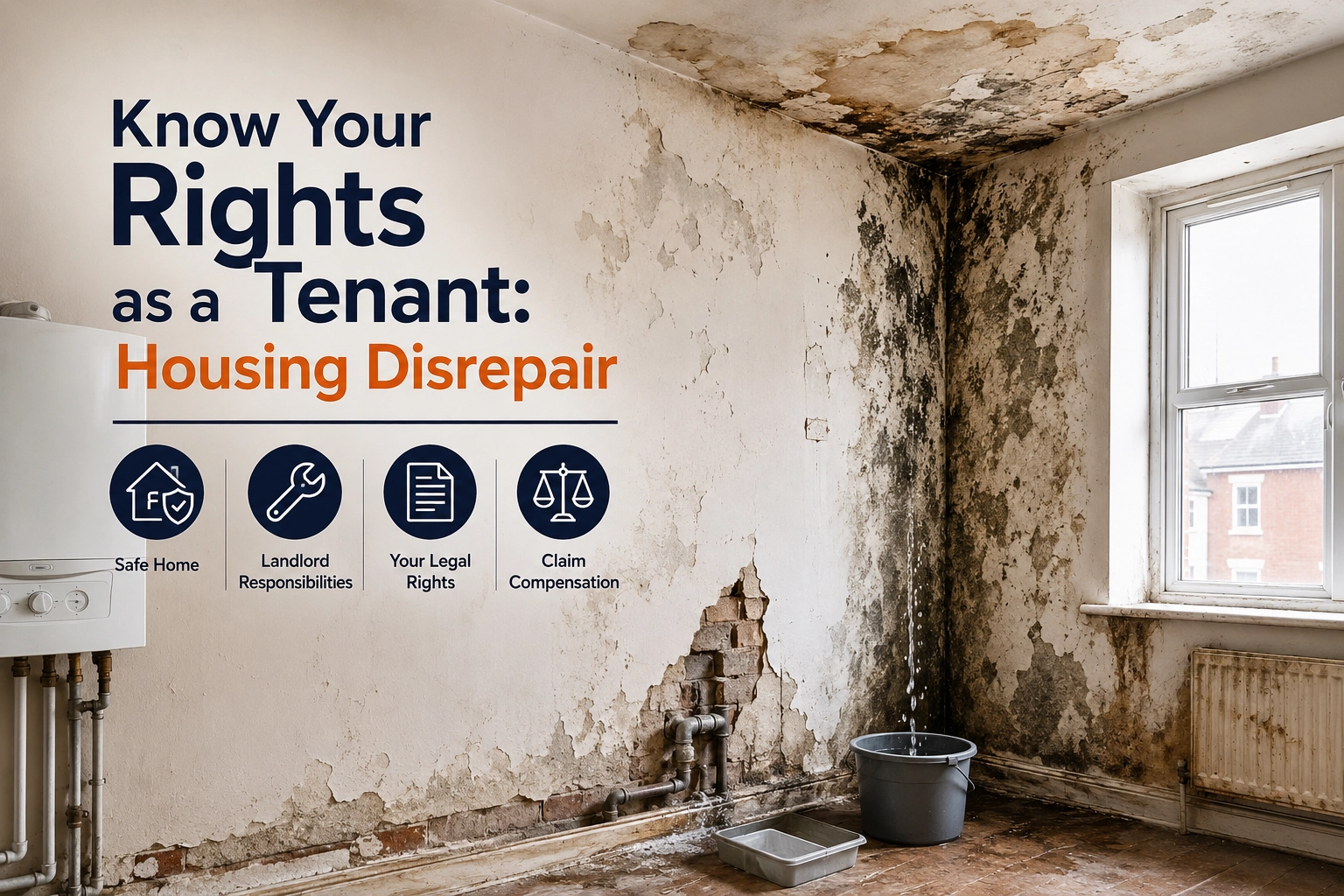
Living in a safe and well-maintained home is a legal right for every tenant in the UK. Unfortunately, many tenants continue to live with issues such as damp, mould, leaking roofs, broken heating systems, faulty plumbing, or structural damage because they are unaware of their legal rights. Housing disrepair not only affects your comfort but can also pose serious risks to your health and wellbeing.
Understanding your rights can help you take the correct steps if your landlord fails to maintain your property. UK law places clear responsibilities on landlords to keep rental homes safe, habitable, and in good repair. If they fail to do so after being informed, you may have the right to request repairs and, in some cases, pursue compensation.
What Is Housing Disrepair?
Housing disrepair refers to problems within a rented property that the landlord is legally responsible for repairing but has failed to fix within a reasonable time after becoming aware of the issue.
Housing disrepair can affect both the structure of the property and essential services needed for safe living.
Common examples include:
- Damp and mould
- Roof leaks
- Broken windows or doors
- Faulty plumbing
- Burst pipes
- Electrical hazards
- Broken boilers
- No heating or hot water
- Structural cracks
- Pest infestations caused by structural defects
- Unsafe stairs or flooring
- Poor ventilation
Some issues may appear minor at first but can become serious if ignored.
Your Legal Rights as a Tenant in the UK
UK tenants are protected by several important laws that require landlords to keep rental properties safe and fit for human habitation.
These include:
- Landlord and Tenant Act 1985
- Homes (Fitness for Human Habitation) Act 2018
- Housing Act 2004
- Defective Premises Act 1972
These laws require landlords to maintain their properties and repair problems that could affect tenants’ health or safety.
As a tenant, you have the right to:
- Live in a safe and habitable property.
- Report repair issues without fear of retaliation.
- Expect repairs within a reasonable timeframe.
- Receive functioning heating, plumbing, electricity, and sanitation.
- Live free from serious damp and mould caused by structural defects.
- Seek compensation if landlord negligence causes damage, illness, or financial loss.
Knowing these rights helps you act confidently if your landlord fails to meet their obligations.
What Repairs Are Landlords Responsible For?
Landlords are legally responsible for maintaining many parts of the property.
These responsibilities generally include:
Structural Repairs
Landlords must repair:
- Walls
- Roofs
- Chimneys
- Foundations
- Windows
- External doors
- Gutters
- Drains
Structural damage left untreated may create safety hazards or worsen over time.
Plumbing Systems
Your landlord should maintain:
- Water pipes
- Sinks
- Toilets
- Baths
- Showers
- Water tanks
- Drainage systems
Leaks should be repaired promptly to prevent water damage and mould growth.
Heating and Hot Water
Every tenant has the right to reliable heating and hot water.
Landlords must repair:
- Boilers
- Radiators
- Central heating systems
- Hot water cylinders
Lack of heating during winter may require urgent attention.
Electrical Safety
Landlords must ensure electrical installations remain safe.
This includes:
- Wiring
- Consumer units
- Light fittings
- Electrical sockets
Faulty electrical systems can present serious fire risks.
Damp and Mould
Where damp or mould results from structural defects, poor insulation, leaking roofs, defective gutters, or plumbing problems, landlords are generally responsible for fixing both the cause and the resulting damage.
What Should You Do If Your Property Is in Disrepair?
Taking the correct steps strengthens your position if repairs are delayed.
1. Report the Problem
Notify your landlord as soon as possible.
Always report issues in writing by:
- Letter
- Property management portal
Keep copies of every communication.
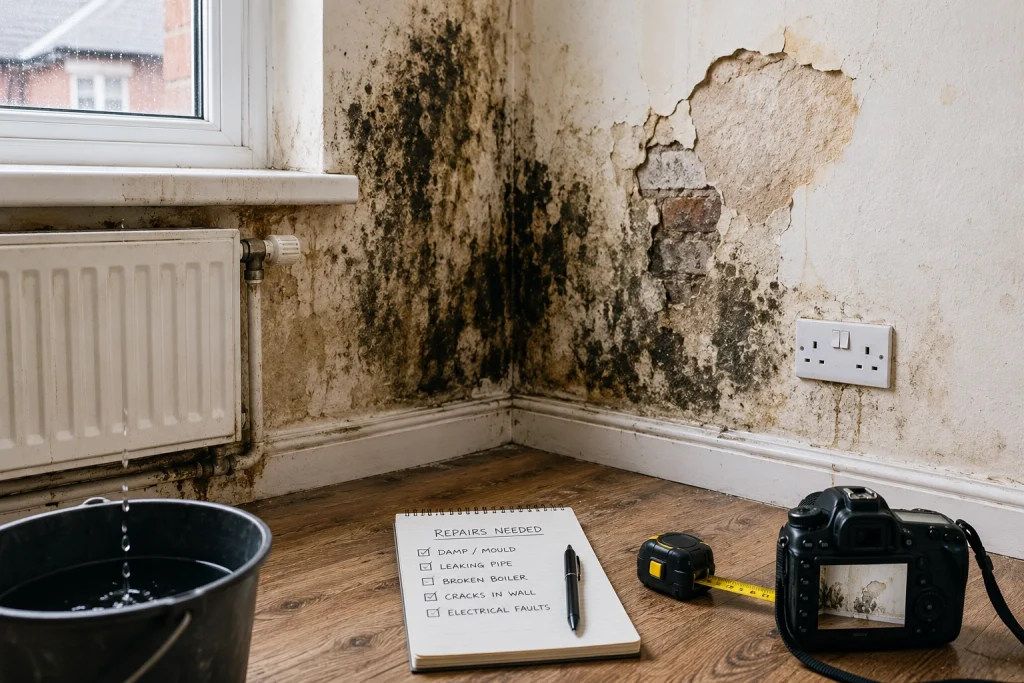
2. Gather Evidence
Document the condition of the property.
Useful evidence includes:
- Photographs
- Videos
- Medical reports
- Repair estimates
- Inspection reports
- Copies of emails and letters
The more evidence you collect, the stronger your case becomes.
3. Allow Reasonable Time for Repairs
Landlords should be given reasonable time to complete repairs after being notified.
Emergency issues such as flooding, electrical hazards, or total heating failure should usually be addressed much more quickly than cosmetic problems.
4. Continue Paying Rent
Unless advised otherwise by a legal professional, continue paying your rent.
Stopping rent payments without legal advice could place your tenancy at risk.
5. Seek Professional Advice
If repairs are repeatedly ignored, you may wish to contact:
- Your local council
- Citizens Advice
- A housing solicitor
- A housing disrepair claims specialist
Professional guidance can help you understand your legal options.
Can You Claim Compensation?
In many cases, yes.
You may be entitled to compensation if:
- The landlord knew about the problem.
- They failed to carry out repairs within a reasonable time.
- The disrepair caused inconvenience.
- Your belongings were damaged.
- Your health suffered.
- You experienced financial losses.
Compensation depends on the circumstances of each case and the impact the disrepair had on your daily life.
Common Housing Disrepair Issues That Lead to Claims
Many successful housing disrepair claims involve issues such as:
| Housing Issue | Potential Impact |
|---|---|
| Damp and mould | Respiratory illnesses, allergies |
| Leaking roof | Water damage, mould growth |
| Broken boiler | No heating or hot water |
| Water leaks | Property damage, unsafe conditions |
| Faulty electrics | Fire and electric shock risks |
| Structural cracks | Safety concerns |
| Broken windows | Security and heat loss |
| Pest infestations | Health hazards |
How Long Do Landlords Have to Carry Out Repairs?
There is no single legal deadline that applies to every repair.
Instead, landlords must complete repairs within a reasonable timeframe based on the urgency of the issue.
For example:
- Emergency hazards may require action within 24 hours.
- Heating failures should generally be addressed quickly, especially during winter.
- Routine repairs may take several weeks depending on complexity and availability of contractors.
Unreasonable delays may strengthen a tenant’s legal position.
Conclusion
Housing disrepair should never be ignored. Whether you’re dealing with damp and mould, leaking pipes, faulty heating, structural damage, or unsafe electrical systems, UK law provides important protections for tenants.
The key is to report problems promptly, keep detailed records, and understand your legal rights. If your landlord fails to carry out necessary repairs after being notified, you may have the right to pursue a housing disrepair claim and seek compensation for the inconvenience, damage, or health issues you’ve experienced.