When we seek medical treatment, we trust healthcare professionals to provide safe and appropriate care. While not every poor outcome is the result of negligence, some mistakes could have been prevented and may cause serious physical, emotional, or financial harm.
Recognising the warning signs of medical negligence can help you understand your rights and decide whether you may have grounds to make a claim.
What Is Medical Negligence?
Medical negligence occurs when a healthcare professional fails to provide the standard of care that is reasonably expected, resulting in avoidable harm to a patient.
This can happen in hospitals, GP surgeries, private clinics, dental practices, or other healthcare settings. If a medical error could have been avoided and directly caused an injury or worsened your condition, you may be entitled to seek compensation.
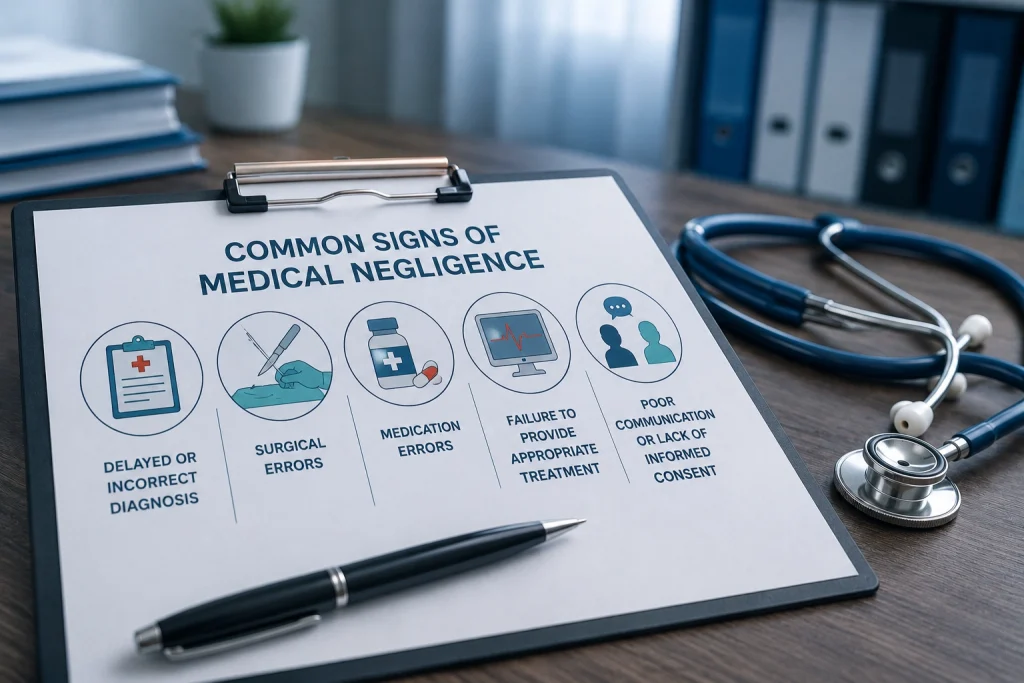
Common Signs of Medical Negligence
Not every medical mistake amounts to negligence. However, the following signs should never be ignored.
Delayed or Incorrect Diagnosis
A delayed or incorrect diagnosis can prevent you from receiving the treatment you need at the right time. This may allow an illness or injury to worsen, leading to unnecessary complications or long-term health problems.
Surgical Errors
Surgery carries risks, but avoidable mistakes are not acceptable. Errors such as operating on the wrong body part, leaving surgical instruments inside the patient, or causing unnecessary damage during a procedure may be signs of medical negligence.
Medication Errors
Mistakes involving medication can have serious consequences. This may include prescribing the wrong medicine, giving an incorrect dosage, or failing to check for allergies or harmful drug interactions.
Failure to Provide Appropriate Treatment
Healthcare professionals should recommend and provide treatment that meets accepted medical standards. Failing to offer suitable treatment, delaying necessary care, or providing inadequate follow-up may result in avoidable harm.
Poor Communication or Lack of Informed Consent
Before undergoing treatment, you should be given clear information about the procedure, potential risks, and available alternatives. If treatment is carried out without your informed consent, it may give rise to a medical negligence claim.
How Can Medical Negligence Affect You?
Medical negligence can have lasting consequences beyond the initial injury.
It may lead to:
- Ongoing pain or suffering
- Additional medical treatment
- Loss of income
- Emotional distress
- Reduced quality of life
- Long-term disability
The impact will vary depending on the nature and severity of the negligence.
What Should You Do If You Suspect Medical Negligence?
If you believe you’ve been affected by medical negligence, taking the right steps can help protect your rights.
Seek Independent Medical Advice
If your condition has worsened or you’re concerned about the treatment you received, seek medical advice from another qualified healthcare professional as soon as possible.
Keep Relevant Records
Gather any documents related to your treatment, including medical records, prescriptions, appointment letters, and correspondence with healthcare providers. These records may help support your claim.
Speak to a Medical Negligence Claims Specialist
A claims specialist can review your circumstances, explain your legal options, and advise whether you may have grounds to pursue compensation.
Can You Make a Medical Negligence Claim?
You may be able to make a claim if:
- A healthcare professional failed to provide an acceptable standard of care.
- That failure directly caused you harm or made your condition worse.
- You suffered physical, emotional, or financial losses as a result.
Each case is unique, so professional advice is important to determine whether you have a valid claim.
Final Thoughts
Medical negligence can have a significant impact on your health and wellbeing. Understanding the warning signs can help you recognise when something may have gone wrong and take appropriate action.
If you believe you’ve suffered because of avoidable medical mistakes, seeking advice from an experienced medical negligence claims specialist can help you understand your rights and explore your options for compensation.